When I began hosting dinner parties, I didn’t see it as art. From my training at Columbia University, I knew tools and techniques to run groups and choose interventions, and many of these theories surrounding group work and clinical practice guided my decisions. Yet they may have also limited my thinking.
Initially, I assumed that simply inviting people to a space might generate meaningful conversation. While food offered a framework for interaction, it did not automatically pave the way to discussions that dove beyond surface-level pleasantries. I watched as some guests remained hesitant and looked for ways to help interrupt some of these silences.
Community is not something that a meal or an event guarantees. Connection requires thoughtful facilitation. Through curated seating charts and planned moments that encourage exchange, food becomes just another tool that can foster exchange.
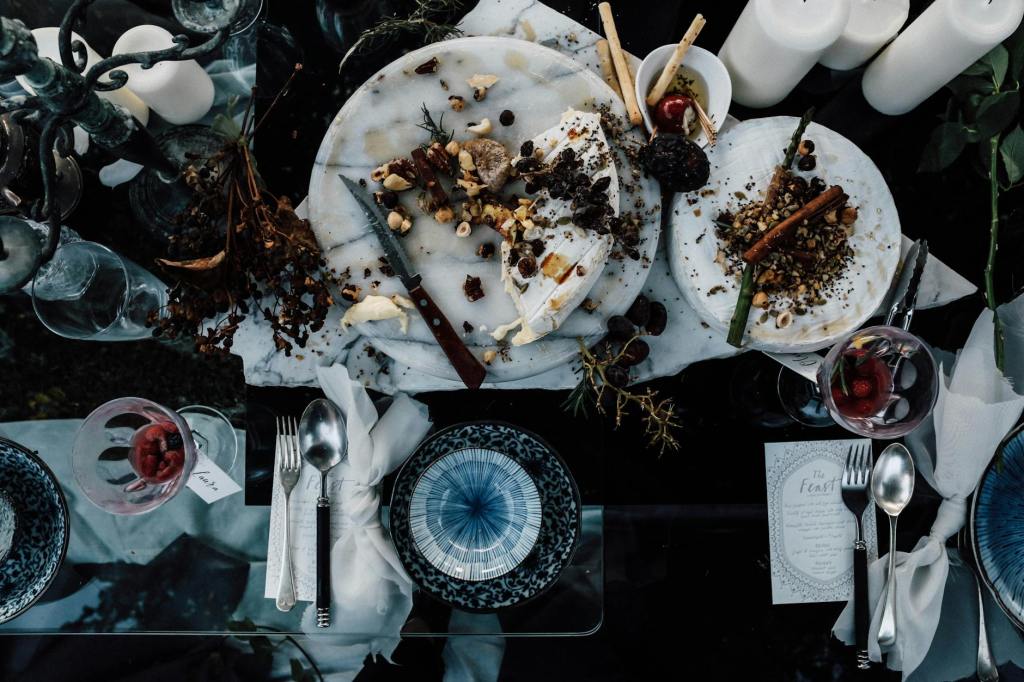
I once imagined that a perfectly-run event would be key to attendees’ experiences, when in actuality, it was tiny mishaps that helped strangers become familiar. Whether a course arrived late or a schedule had to be adjusted, these perceived imperfections actually opened the door for shared humanity, humor, and empathy to build among participants. So, too, did revealing my own anxieties. This honesty dissolved some of the social barriers that can form in unknown encounters. Sometimes, expressed and honest acts of care trump flawless execution.
Though I first positioned myself as a host in the traditional sense at each dinner, I have come to understand my role is more nuanced and complex. I am an artist, mediator, and equal participant as the event unfolds. In this way, hosting is a performance and disrupts definitive lines that might separate authorship and service. Understanding this has unearthed questions of power, creation, and care in my work.
Similarly, I often assumed that attending an event would become self-explanatory as participants derive their own meaning from the organized experience. I have learned that without framing, intended significance can be lost. As a result, I have come to learn that mediation is folded into my practice. My writings and the conversations that are shared after each event become part of the experience and carry conversation from the dinner table into an extended setting.
The dinner party has tested my assumptions and continues to shape my work. What might be considered one-off events have pieced together to form a methodology that weaves performance, hospitality, and critical observation. Creating spaces that encourage meaningful encounters is a fragile yet deliberate process. This is how my work is unique.
